



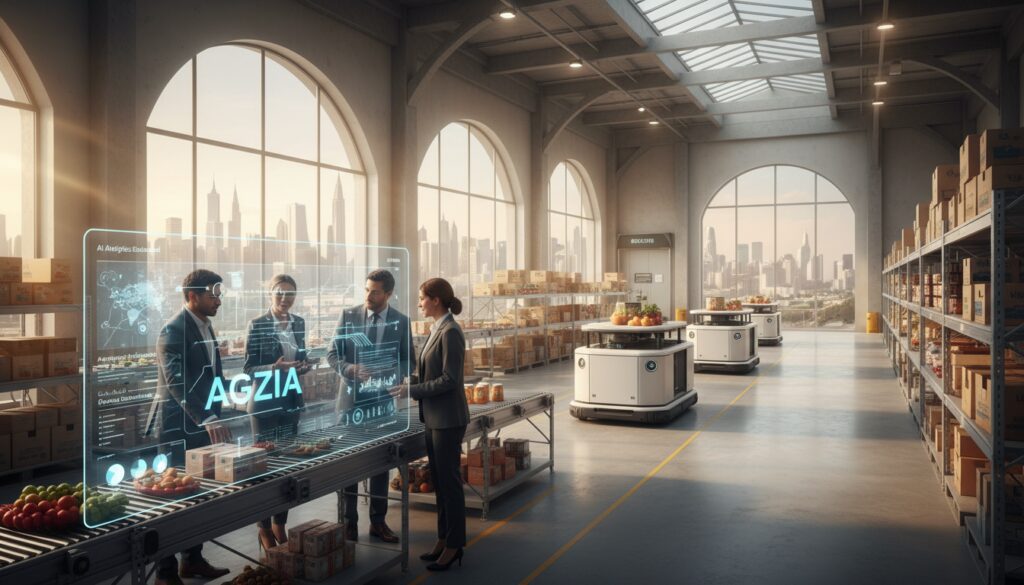
The Gulf region has a big challenge ahead. It needs to feed its growing population. The UAE spends about $19 billion on food imports every year.
This heavy reliance on global markets makes efficient distribution very important. Local leaders and businesses are working hard to solve this problem.
Modern technology is helping to solve this issue. By using ai in food logistics, companies can track shipments in real-time. This smart approach helps reduce waste in the GCC.
IoT sensors and advanced algorithms keep the cold chain safe. They make sure food stays fresh during transport. This is key for keeping food fresh and reducing waste.
Using these digital tools is essential for long-term security. It helps the UAE stay strong in a changing world.
Key Takeaways
- AI improves visibility across the entire regional supply chain.
- IoT sensors protect perishable goods by monitoring temperature in real-time.
- Smart routing helps lower the massive $19 billion bill for sourcing.
- Predictive analytics significantly decrease spoilage in the harsh desert climate.
- Digital transformation supports the UAE’s long-term sustainability goals.
- Real-time data allows for faster response to global logistics disruptions.
1. The Scale of the GCC’s Food Import Challenge
The GCC’s food import situation is a big problem. It affects the region’s food safety. The GCC spends a lot on food imports every year.
Understanding the $19 Billion Food Security Gap
The GCC countries spend billions on food imports every year. This costs the region’s economy a lot. It shows there’s a big gap between what’s produced and what’s needed.
The $19 billion food security gap is a big worry. We need to look at how much each GCC nation imports to understand this issue better.
Import Dependency Across GCC Nations
The GCC depends a lot on food imports. Its dry climate and little land make it hard to grow enough food locally.
| Country | Food Import Dependency (%) | Annual Food Import Value (Billions USD) |
|---|---|---|
| United Arab Emirates | 90% | 12 |
| Saudi Arabia | 85% | 15 |
| Qatar | 90% | 4 |
The table shows how much each GCC nation imports. Countries like the UAE, Saudi Arabia, and Qatar need a lot of imports to feed their people.
To fix the $19 billion food security gap, we need good plans. Ideas like smart cold chain UAE and food waste reduction GCC can help a lot.
2. The Hidden Cost of Food Waste in the Gulf Region
The Gulf Cooperation Council (GCC) has a big problem with food waste. This issue affects the region’s food security a lot. It’s not just about money; it also hurts the environment and society.
Food waste is a big problem in the GCC. On average, each person throws away about 150 kilograms of food every year. This shows we need better ways to cut down on food waste and make food logistics better.
150 Kilograms Per Person: Breaking Down the Numbers
The GCC’s food waste issue is huge. Every person wastes about 150 kilograms of food each year. Let’s look at the numbers to get a better idea.
| Country | Food Waste Per Capita (kg/year) | Total Food Waste (tons/year) |
|---|---|---|
| United Arab Emirates | 140 | 1,300,000 |
| Saudi Arabia | 160 | 4,800,000 |
| Qatar | 170 | 400,000 |
The table shows how much food waste GCC countries have. Countries like Saudi Arabia and the UAE waste a lot of food. This adds up to a huge amount of waste.
Economic and Environmental Impact of Food Loss
Food loss in the GCC has big economic and environmental costs. It leads to financial losses and wastes resources used in growing, processing, and moving food.
AI in food logistics and blockchain food traceability can help reduce food waste. These technologies can make the supply chain more efficient. This way, GCC countries can lessen the economic and environmental harm of food loss.
Using AI and IoT can cut down food waste. It makes the supply chain better and lets us track food in real time. By using these technologies, the GCC can work towards a more sustainable food system.
3. Geographic Vulnerabilities in GCC Food Logistics
The GCC region’s unique geography creates challenges for food logistics. Its strategic location is good for trade but also risks its food logistics.
The GCC countries, like the UAE and Saudi Arabia, rely a lot on imports for food. This makes their food supply chains vulnerable to global tensions and regional issues.
The Strait of Hormuz: A Critical Chokepoint
The Strait of Hormuz is a big risk for the GCC’s food logistics. It’s a key waterway for oil and gas, and also for food imports.
This waterway is vital for oil exports and food imports into the GCC. Any trouble here can badly affect the region’s food security.
Port Infrastructure and Distribution Challenges
The GCC’s food logistics also face port and distribution challenges. Ports like Dubai’s Jebel Ali and Dammam’s King Abdulaziz Port are key.
These ports deal with a lot of imports. But they face congestion and need modernization to keep up with demand.
| Port Name | Country | TEU Capacity (2023) | Key Features |
|---|---|---|---|
| Port of Jebel Ali | UAE | 19 million | State-of-the-art facilities, major transshipment hub |
| King Abdulaziz Port | Saudi Arabia | 4.5 million | Key import hub for Saudi Arabia, handling significant cargo volumes |
| Port of Salalah | Oman | 3.5 million | Major transshipment hub, strategic location near the Strait of Hormuz |
To tackle these challenges, GCC countries are improving their ports and using smart cold chain solutions. Technologies like IoT sensors and AI can make food logistics more resilient.
Also, reducing food waste in the GCC is key. By cutting down on waste, the GCC can rely less on imports and boost food security. Using smart cold chain UAE solutions helps keep food fresh, reducing spoilage.
4. Where Traditional Cold Chain Systems Fall Short
The GCC’s food import bill keeps rising. This shows the problems with old cold chain systems. The region’s need for more food imports highlights the issues with keeping food cold and tracking it well.
Temperature Inconsistencies and Quality Degradation
Keeping food at the right temperature is hard for old cold chain systems. Changes in temperature can cause food to spoil, leading to big losses for those who import and sell food. Old refrigeration and poor tracking make it tough to keep food safe.
In the GCC, extreme weather makes keeping food safe even harder. Old systems can’t track temperature changes well. This means food can spoil before anyone notices, hurting both the food and the business.
Visibility Gaps in Multi-Modal Transportation
Old cold chain systems also struggle to track food as it moves. It’s hard to keep track of food as it goes through different places. This makes it hard to keep food safe and follow food safety rules.
Using AI in food logistics and blockchain food traceability can help. These new tools give real-time updates and help control the cold chain better. This makes food supply chains in the GCC more reliable and less likely to lose money due to spoiled food.
5. AI in Food Logistics: Transforming Supply Chain Intelligence
AI is changing the food logistics world by making supply chains smarter. The food logistics field is complex. It involves many people, perishable items, and strict quality checks. AI brings new tools for predicting, planning routes, and making quick decisions.
Predictive Analytics for Demand Forecasting
Predictive analytics is key in food logistics. It helps businesses guess demand better. AI looks at past data, trends, and outside factors like weather and economy. This way, it predicts demand accurately.
Benefits of Predictive Analytics:
- Improved inventory management
- Enhanced supply chain resilience
- Better alignment with consumer demand
Route Optimization Through Machine Learning
AI also improves route planning. Machine learning looks at traffic, road conditions, and weather. It finds the best routes for delivery. This cuts costs and keeps food fresh and quality high.
- Reduced fuel consumption and lower emissions
- Decreased transit times and improved delivery schedules
- Enhanced customer satisfaction due to timely deliveries
Real-Time Decision Making at Scale
AI helps make quick decisions in food logistics. For example, if there’s traffic or weather changes, AI can adjust plans. This keeps the supply chain running smoothly and products fresh.
Real-time decision making allows for:
- Proactive management of possible disruptions
- Quick adjustments to changing situations
- Improved supply chain efficiency and reliability
6. Smart Cold Chain UAE: IoT Sensors and Temperature Monitoring
Smart cold chains in the UAE are getting a boost from IoT sensors and advanced temperature monitoring. This tech is key for keeping products at the right temperature during shipping.
Continuous Temperature and Humidity Tracking
IoT sensors help track temperature and humidity in real-time. This means any changes are caught right away. This lets teams act fast to fix any issues.
Keeping the right temperature and humidity helps keep food and other goods fresh. It also cuts down on spoilage and contamination risks.

Automated Alerts and Intervention Protocols
IoT systems send out alerts when there’s a problem with temperature or humidity. These alerts help teams act quickly to protect goods in transit or storage.
With automated plans in place, companies can fix problems fast. This keeps their products safe and sound.
Integration with Warehouse Management Systems
IoT sensors and temperature monitoring work well with warehouse management systems (WMS). This setup makes data sharing smooth and efficient. It helps all parts of the supply chain work better together.
This integrated system helps businesses run their logistics better. It improves how they manage stock and cuts costs from manual checks and fixes.
7. Blockchain Food Traceability: Building Trust and Transparency
Blockchain is becoming key in making food traceability better. It tackles old problems of transparency and trust. It makes a permanent record of food’s journey, cutting down fraud and contamination risks.
Blockchain in food traceability has many benefits. It lets us see a product’s whole journey from start to end. This gives end-to-end visibility.
End-to-End Product Journey Documentation
Blockchain makes a permanent record of a product’s history. This includes where it came from, how it was made, stored, and shipped. This transparency is key for trust among consumers and others.
For example, a QR code on a product can show its whole history. This includes the farm it came from, the factory it was processed in, and how it was shipped. This boosts trust and makes everyone accountable in the supply chain.
Combating Food Fraud and Ensuring Authenticity
Food fraud is a big problem worldwide. It can harm people’s health. Blockchain helps by making sure food is real.
Blockchain gives each product a unique code. This code can check if the product is genuine at any time. It makes it hard for fake products to get into the market.
Regulatory Compliance and Audit Trails
Blockchain also helps with following rules by keeping a clear and safe record of all deals. This is very important in the GCC, where food safety rules are strict.
With a detailed audit trail, companies can show they follow rules. This lowers the chance of breaking rules and facing fines.
In short, blockchain is changing food traceability in the GCC for the better. It makes things more transparent, fights fraud, and follows rules. This builds trust and makes the food supply chain safer and more reliable.
8. Food Waste Reduction GCC: AI-Powered Shelf Life Extension
The GCC is using AI to cut down on food waste. Food waste is a big problem here, affecting the economy and the environment. AI helps manage food better, check its quality, and reduce waste.
Dynamic Inventory Management and FIFO Optimization
AI is changing how GCC countries manage food. It uses smart analytics to guess how much food will be needed. This way, older food is sold or eaten first, making sure it doesn’t go bad.
This method cuts down on waste and saves money. It helps avoid selling or using expired food. By knowing how much food to have, stores can avoid having too much.
Quality Assessment Through Computer Vision
AI uses computer vision to check food quality. It spots problems like bad food or contamination. This helps remove bad food from the supply chain.
For instance, in places like warehouses, AI can scan food on conveyor belts. It finds problems that people might miss.
Waste Diversion and Circular Economy Applications
AI helps find ways to reuse food waste. This supports a circular economy, where waste is less and resources are used better.
For example, AI can find extra food to give to food banks. This helps people in need and reduces waste.
| AI Application | Benefits |
|---|---|
| Dynamic Inventory Management | Reduces waste, minimizes economic losses, optimizes FIFO practices |
| Quality Assessment Through Computer Vision | Detects defects, spoilage, or contamination, improving product quality |
| Waste Diversion and Circular Economy | Diverts waste from landfills, supports circular economy, aids food banks |
9. Case Applications: AI Implementation in UAE Food Supply Chains
The United Arab Emirates is leading in using AI in food supply chains. This change is making food security and supply chain management better.
In the UAE, AI is being used in many ways. For example, Dubai’s Smart Port and Abu Dhabi’s farm-to-table technology are showing great results.
Dubai’s Smart Port and Automated Distribution Centers
Dubai’s Smart Port is a top example of AI in food supply chains. It uses AI-driven predictive analytics and IoT sensors to make things run smoother.
The automated centers in Dubai have the latest tech. This includes robotics and machine learning algorithms for better inventory management and logistics.
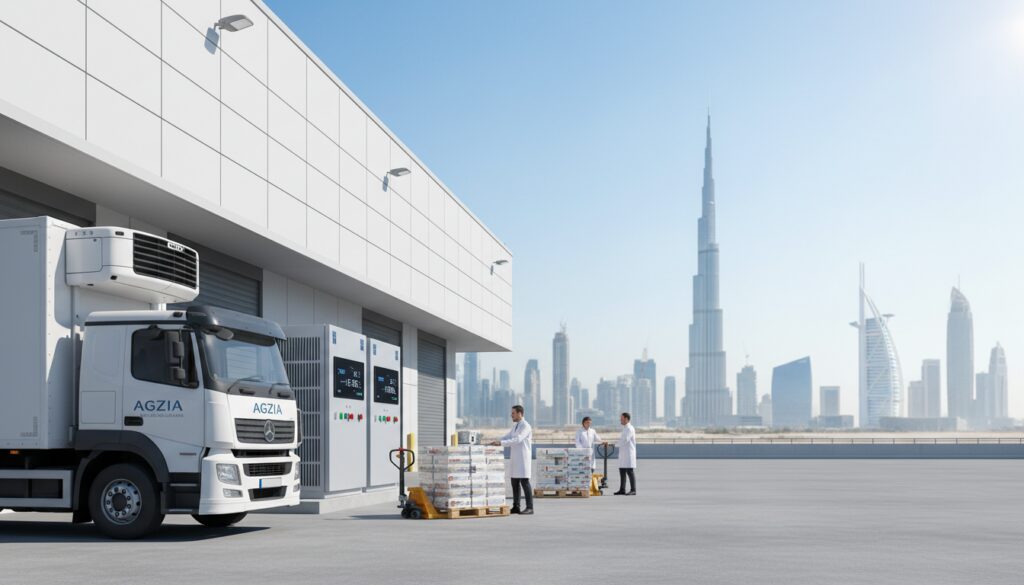
AI has made a big difference in Dubai’s Smart Port and centers. It has improved how we see the supply chain and cut down on delivery times. This means food is fresher and better for us.
Abu Dhabi’s Farm-to-Table Technology Integration
Abu Dhabi is also using AI in its farm-to-table projects. It’s making the food supply chain more open and efficient.
Blockchain for food traceability is a key technology used. It lets us track food from farms to our plates in real-time. This ensures food is genuine and of high quality.
| Initiative | Description | Benefits |
|---|---|---|
| Dubai’s Smart Port | AI-driven predictive analytics and IoT sensors for streamlined operations | Enhanced efficiency, reduced transit times |
| Abu Dhabi’s Farm-to-Table | Blockchain for food traceability and real-time tracking | Increased transparency, ensured authenticity and quality |
The UAE is really committed to using AI and other tech to improve food supply chains. With smart cold chain UAE and blockchain food traceability, it’s setting a high standard for food security and supply chain management in the area.
10. Overcoming Implementation Challenges in the GCC Context
The GCC region is moving towards using AI in food logistics. But, there are many challenges to overcome. We need to solve these to make AI work well.
Infrastructure Investment and Technology Adoption
The GCC countries must invest in digital infrastructure for AI in food logistics. They need to update logistics facilities and use new tech like IoT sensors and blockchain.
Infrastructure Requirements
| Infrastructure | Description | Benefits |
|---|---|---|
| IoT Sensors | Real-time monitoring of temperature, humidity, and other environmental factors. | Enhanced quality control and reduced food waste. |
| Blockchain Technology | Secure and transparent recording of transactions and product movements. | Improved traceability and reduced fraud. |
| Data Analytics Platforms | Advanced analytics for demand forecasting and supply chain optimization. | Better decision-making and reduced costs. |
Workforce Training and Digital Literacy
AI in food logistics needs a skilled workforce. Training programs are key for digital literacy.
Training should cover:
- Understanding AI and machine learning algorithms
- Operating and maintaining IoT devices
- Data analysis and interpretation
Regulatory Frameworks and Data Governance
Strong regulatory frameworks and data governance are vital. They ensure AI is used safely and effectively. This includes protecting data privacy and following local laws.
By tackling these challenges, the GCC can use AI to improve food security and reduce waste. It will also make the food supply chain more efficient.
11. The Economic and Strategic Benefits of AI-Driven Food Security
AI is changing the food security game in the GCC. It helps these countries deal with food imports better. This makes food supply more stable and secure.
Cost Reduction and Operational Efficiency Gains
AI in food logistics cuts costs and boosts efficiency. For example, smart cold chain UAE projects improve temperature control. This saves energy and reduces food waste.
A study showed AI’s benefits in GCC food logistics:
| Area of Impact | Pre-AI Implementation | Post-AI Implementation |
|---|---|---|
| Logistics Costs | 10% of total cost | 7% of total cost |
| Product Loss | 15% of total products | 8% of total products |
| Supply Chain Visibility | Limited real-time data | Real-time monitoring with blockchain food traceability |
Strengthening National Food Security Resilience
AI boosts national food security by giving real-time insights. GCC countries can handle disruptions better. This keeps food supply stable.
AI helps GCC nations rely less on imports. This boosts economic stability and strategic power in the region.
12. Conclusion: The Path Forward for GCC Food Systems
The GCC’s food systems are at a critical point. AI solutions offer a promising way forward. By using AI in food logistics and focusing on reducing food waste, the region can make its food system better.
AI can help cut the $19 billion food security gap. It does this by reducing waste and making supply chains more efficient. The use of predictive analytics and real-time decision-making can change the GCC’s food logistics.
Investing in infrastructure and technology is key. But, it’s also important to train the workforce and improve digital skills. This ensures the successful use of new technologies.
The GCC’s food systems future is bright with AI-driven innovations. Embracing these changes will make the food system stronger. It will be ready to meet the needs of a growing population.