
Saudi Arabia’s food manufacturing sector is undergoing a transformation that has no real precedent in the region’s economic history. Under Vision 2030, the Kingdom is actively repositioning itself from a food import-dependent economy to a localised production base — offering incentives, industrial city infrastructure, and regulatory frameworks that make now one of the more strategically compelling moments to enter the KSA food manufacturing market.
For international food brands, regional producers, and investors evaluating the Kingdom’s food sector, contract manufacturing — the model where a brand outsources physical production to an established local manufacturer — has emerged as one of the most practical routes to market entry. It avoids the full capital commitment of a greenfield factory build while still allowing brands to access local production, local regulatory compliance, and the “Made in Saudi” positioning that is increasingly valued by Saudi retail buyers and government procurement channels.
But contract food manufacturing in Saudi Arabia is not simply a matter of finding a factory and signing an agreement. The landscape is more nuanced than that, and the decisions made at the outset have long-term implications for brand control, quality consistency, and profitability. This guide covers the strategic, regulatory, and operational considerations that matter most.
Why KSA Contract Manufacturing Is Growing Fast
Several forces are converging to expand the contract food manufacturing market in Saudi Arabia simultaneously.
The Vision 2030 Localisation Mandate: Saudi Arabia has set an explicit target to localise 85% of its food processing across 11 designated domestic clusters by 2030. Government incentives — including subsidised industrial land through MODON (the Saudi Authority for Industrial Cities and Technology Zones), reduced utility costs, and access to the Agricultural Development Fund — are driving investment into local manufacturing capacity.
The Scale of Domestic Demand: Saudi Arabia has a population of approximately 36 million people, a growing tourism and hospitality sector, and per capita food spending that continues to rise year on year. The Kingdom is the largest food market in the GCC, and the domestic appetite for packaged, processed, and branded food products is significant and structurally growing.
Import Substitution Pressure: Saudi agricultural GDP reached approximately SAR 114 billion in 2024 — a record — but the Kingdom still imports a substantial share of processed food. For regional brands that currently export finished products into KSA, producing locally through a contract manufacturer eliminates customs duties, shortens lead times, and often yields a meaningful cost advantage.
The Rise of Saudi Consumer Nationalism: “Made in Saudi” is no longer just a regulatory compliance box. It is increasingly a commercial advantage in retail, foodservice, and government-linked institutional buying. Brands that can credibly demonstrate local production origins are gaining shelf space and tender access that is not available to purely imported products.
The Regulatory Framework: What Changes Under SFDA
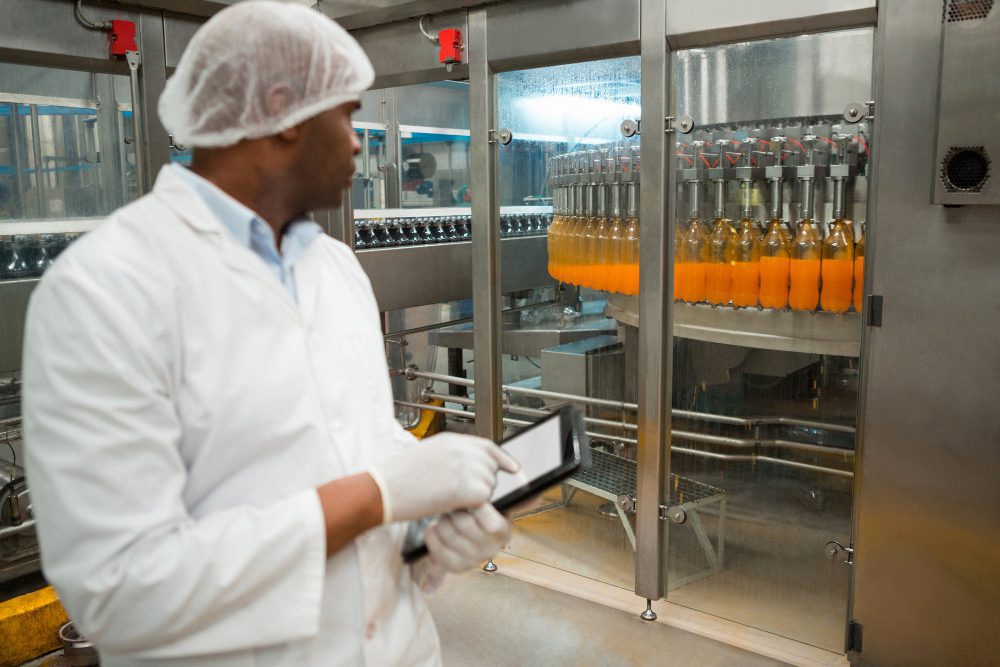
The Saudi Food and Drug Authority (SFDA) governs food manufacturing and labelling standards in the Kingdom, and any contract manufacturing arrangement in Saudi Arabia must be structured to maintain full SFDA compliance.
Key regulatory considerations for contract manufacturing arrangements include:
Product Registration: All food products sold in Saudi Arabia must be registered with the SFDA before they can be commercially distributed. If you are using a contract manufacturer, responsibility for product registration — and compliance with SFDA’s labelling, ingredient, and additive standards — typically sits with the brand owner, not the manufacturer. Brands must ensure that formulations used in KSA production align precisely with SFDA-approved specifications.
Halal Certification: Saudi Arabia requires halal certification for all food products. Your contract manufacturer must hold a valid halal certificate from a body recognised by the Saudi Standards, Metrology and Quality Organisation (SASO). Verifying the scope and currency of that certification — specifically that it covers the product category and production line you intend to use — is a non-negotiable due diligence step.
GMP and Food Safety Standards: Contract manufacturers operating in Saudi Arabia are expected to comply with Good Manufacturing Practices aligned with international standards. Many of the larger facilities in industrial cities carry FSSC 22000 or ISO 22000 certification. Where a manufacturer does not hold international certification, brands commissioning production should conduct their own facility audit before signing.
Labelling Requirements: SFDA labelling standards include Arabic language requirements, specific nutritional disclosure formats, and restrictions on certain health and functional claims. Labelling compliance is the brand owner’s responsibility — not the manufacturer’s — and errors at this stage can result in shipment holds or product recalls.
Choosing the Right Contract Manufacturer: What to Evaluate
The KSA contract manufacturing market is not homogenous. Facilities range from well-capitalised industrial operations in MODON cities with automated production lines and international certification, to smaller regional manufacturers operating below the standard that internationally-aligned brands typically require. Due diligence is not optional.
Capability Fit
The most fundamental question is whether the manufacturer’s existing equipment and process capability matches your product’s technical requirements. A facility optimised for long-shelf-life ambient products is not the right partner for a chilled ready meal. A dairy processor with HTST pasteurisation lines cannot produce ESL products without capital investment.
Before any commercial conversation, verify:
- Whether the production line required for your product exists and is operational
- Current utilisation rates — heavily utilised lines leave little room for a new client’s production schedule
- Minimum order quantities and whether they are compatible with your volume forecast
- Flexibility to accommodate product development iterations
Quality Systems
Ask for the manufacturer’s most recent external audit reports. A credible manufacturer will share these without hesitation. Review HACCP documentation, corrective action logs, and any recall or non-conformance history. The quality culture of a contract manufacturer is one of the hardest things to change after a relationship has begun.
Commercial Terms and IP Protection
Contract manufacturing agreements in Saudi Arabia should explicitly cover:
- Intellectual property ownership of formulations and packaging specifications
- Non-compete clauses preventing the manufacturer from producing equivalent products for direct competitors
- Confidentiality obligations covering proprietary recipes and production data
- Minimum production commitments and volume flexibility provisions
- Quality specifications, reject criteria, and liability allocation for non-conforming production
Saudi contract law applies to these agreements; engaging a local legal advisor to review terms is strongly recommended.
Industrial City Location
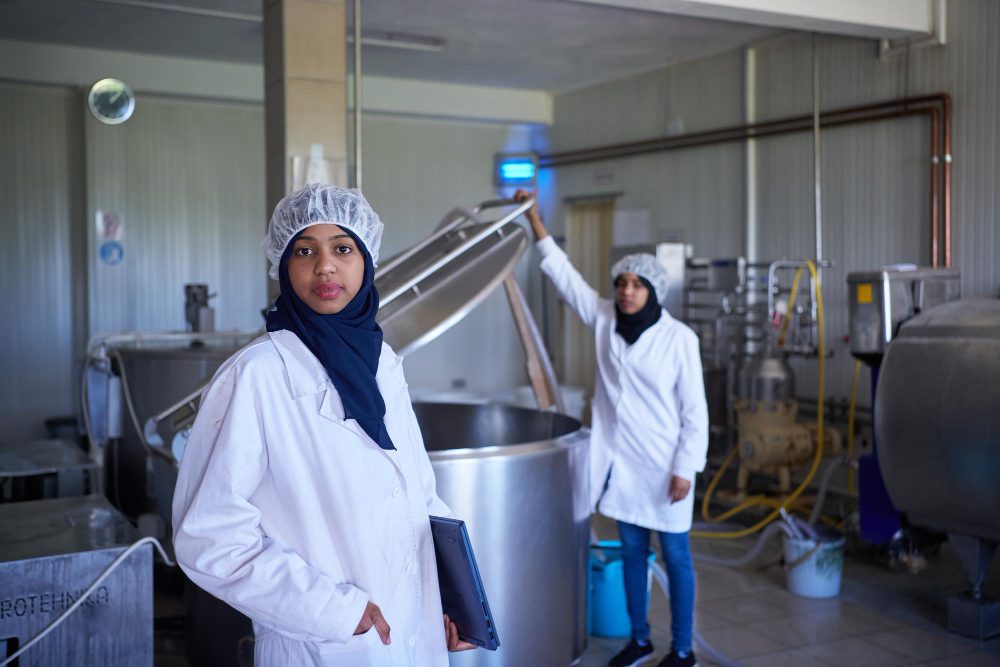
The location of your contract manufacturer affects logistics costs, regulatory processing times, and access to raw material supply chains. MODON’s industrial cities — in Riyadh, Jeddah, Dammam, and other regions — are purpose-built for food manufacturing and typically offer superior infrastructure, utility reliability, and regulatory proximity compared to standalone facilities outside designated zones.
The Alternative: Greenfield vs. Contract — A Strategic Framework
Contract manufacturing is the faster, lower-capital route to market entry in KSA. But it is not always the right long-term answer. The strategic logic typically unfolds in stages:
Phase 1 — Market Validation (0–24 months): Use a contract manufacturer to enter the market, validate demand, build retail relationships, and accumulate the volume data needed to justify a capital investment decision. Keep CAPEX commitment minimal while the commercial model is proven.
Phase 2 — Capacity Decision (18–36 months): Once you have demonstrated consistent demand, the economics of owning versus commissioning production shift. At meaningful scale — typically from 500 tonnes per year upward depending on category — owned production begins to offer a cost-per-unit advantage that contract manufacturing cannot match.
Phase 3 — Asset Investment: A greenfield build, acquisition of an existing facility, or joint venture with the contract manufacturer. The data and relationships built in Phase 1 and 2 make the capital case far cleaner than entering with a greenfield assumption.
This is the framework that disciplined food investors use in KSA. Those who skip Phase 1 — committing capital to a factory before the market is validated — carry significantly more risk than the market warrants.
The 2026 Opportunity Window
Saudi Arabia’s food sector investment environment in 2026 is, by objective measure, more favourable than it has been at any prior point. The combination of government-backed industrial infrastructure, Vision 2030 localisation incentives, SFDA regulatory clarity, and a large domestic consumer market creates conditions that are attracting regional and international food brands at an accelerating rate.
The brands and investors entering now — through a well-structured contract manufacturing arrangement — are building supply chain and commercial relationships ahead of the competitive pressure that will inevitably intensify as the decade progresses.
Navigating KSA Food Manufacturing With the Right Partner
Understanding the regulatory pathway, identifying and auditing the right contract manufacturing partners, structuring commercial agreements, and building the bridge between market entry and long-term asset ownership — these are the engagements that Agzia has conducted across the KSA food sector for the brands and investors that get it right.
If you are evaluating a contract manufacturing strategy for Saudi Arabia, the starting point is a structured project assessment — not a factory visit.