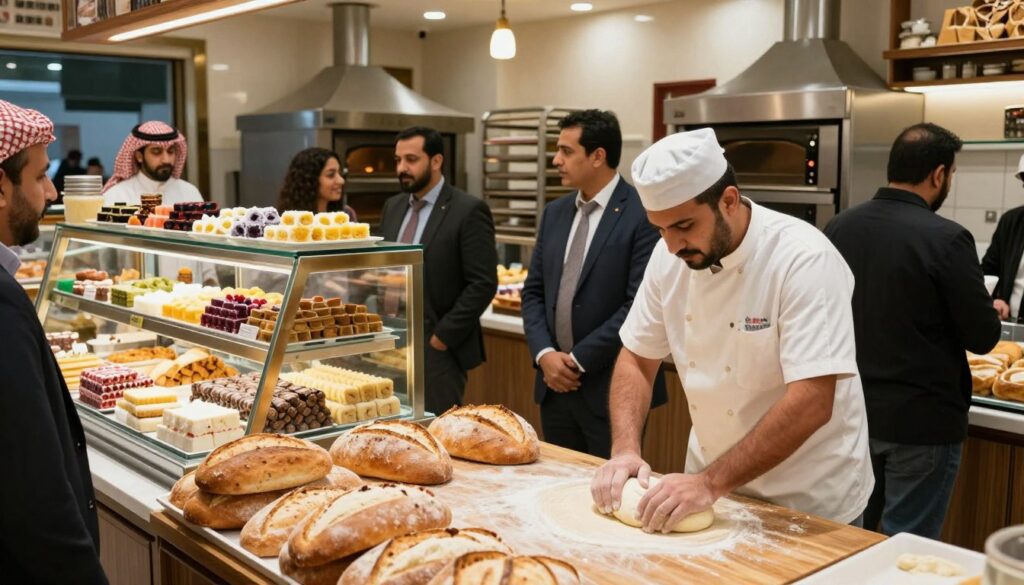
The last 24 months have seen a big change in the food sector. Big companies are focusing on market consolidation. They want to make sure they are stable and work well.
This change is a smart move to keep supply chains safe from world problems. There has been a lot of M&A activity. This has changed how both small and big bakeries compete. These moves help the bakery industry in ksa grow as planned.
Key Takeaways
- The last two years marked a period of intense structural change.
- Large players are using mergers to stabilize their supply chains.
- Artisanal producers face new challenges and opportunities for growth.
- Strategic acquisitions are redefining the competitive landscape.
- These shifts support the long-term economic vision of the region.
Evolution of the Bakery Industry in KSA
The bakery industry in KSA has changed a lot over the years. It has grown from small, local shops to a big, efficient market. This change happened because more people wanted good food all the time.

Historical Growth Trajectory
At first, small family shops made bread for their neighborhoods. They used old recipes and manual work. But as cities grew, they had to make more bread to keep up.
People started wanting reliable and good-quality bread every day. This made small shops struggle. They couldn’t keep up with the demand for better bread.
Transition from Artisanal to Industrial Models
The industry then moved to big, industrial bakeries. These places made lots of bread and kept it the same everywhere. They used automated machines to make more bread safely and cleanly.
This change was not just about making more bread. It was about being efficient and green. Big bakeries could manage their stock better and throw away less. Now, these big places are the heart of the bakery industry in KSA.
Historical Performance and Market Dynamics
Before the current wave of consolidation, the Saudi bakery market was full of small, independent producers. These small businesses served specific areas without a big supply chain. They struggled to grow because they couldn’t buy in bulk.
Pre-Consolidation Market Fragmentation
The Saudi food sector had thousands of small bakeries. These bakeries were family-owned and spread out all over the Kingdom. This made the bakery market share thin and created many problems:
- Limited investment in advanced automated machinery.
- Inconsistent product quality across different regions.
- Higher per-unit production costs due to smaller purchasing volumes.
- Difficulty in maintaining standardized distribution networks.

Key Performance Indicators in the Last Decade
Despite being fragmented, the food production growth stayed steady for ten years. Demand for bakery items kept going up with the Kingdom’s population and cities growing. But, the lack of big production facilities held back efficiency.
The table below shows the old fragmented market and the new, changing structure:
| Metric | Fragmented Era | Consolidated Trend |
|---|---|---|
| Production Scale | Small/Local | Industrial/Large |
| Supply Chain | Disjointed | Integrated |
| Market Share | Highly Distributed | Concentrated |
The Saudi food sector kept growing, but it couldn’t meet modern consumer needs. As the bakery market share moved to bigger, more efficient players, consolidation became necessary. This change led to the modern, tech-driven industry we see today.
The Shift Toward Market Consolidation
In Saudi Arabia, the bakery industry is growing. Market consolidation is now key for survival. Many mid-sized bakeries are merging or growing to stay ahead.
This change shows a bigger trend. In today’s food world, being efficient and reaching more people is what matters most.
Drivers of Industry Integration
Central management and smoother workflows are driving this change. By combining resources, bakeries cut out waste. They focus on what they do best.
This strategic alignment helps them meet changing customer needs in Saudi Arabia. It’s a smart move for staying ahead.
Companies that merge also get big advantages. They can invest in new tech and people. This helps them deal with rising costs and market ups and downs.
Economies of Scale in Modern Baking
Modern industrial baking means bigger, more efficient bakeries. They make more, but at lower costs. This keeps profits high in a busy market.
Bigger places also make quality control easier. This is hard for small bakeries. These economies of scale help with innovation and growing their reach.
| Feature | Traditional Bakery | Industrial Baking |
|---|---|---|
| Production Scale | Small/Batch | High-Volume/Continuous |
| Cost Efficiency | Higher per unit | Lower per unit |
| Quality Control | Manual/Variable | Automated/Consistent |
| Market Reach | Local/Neighborhood | Regional/National |
Key M&A Activity Over the Last 24 Months
The Saudi bakery industry has changed a lot in two years. There’s been a lot of M&A activity. Big players are trying to get bigger. These deals change how the industry works in the Kingdom.
Major Acquisitions and Mergers
There have been big deals that made smaller places bigger and more efficient. These deals help with supply chains and growing in new areas. Companies get bigger and better by working together.
These deals often get new tech and better ways to get products to people. In cities like Riyadh and Jeddah, demand for good bakery items is high. Here’s a table showing recent changes.
| Transaction Type | Primary Driver | Market Impact |
|---|---|---|
| Horizontal Merger | Market Share Expansion | Increased Pricing Power |
| Vertical Acquisition | Supply Chain Control | Reduced Operational Costs |
| Strategic Buyout | Technology Integration | Enhanced Product Quality |
Impact of Private Equity on Market Structure
Private equity investment has changed the market fast. These firms bring money and new ways of doing things. They help make the industry more modern and efficient.
Also, private equity investment makes things more open and efficient. Smaller companies must innovate or partner up to stay in the game. This makes the bakery sector stronger and more ready for Saudi consumers’ needs.
Strategic Drivers Behind Recent Acquisitions
The Saudi bakery sector has seen a big increase in mergers and acquisitions. This move is aimed at gaining long-term market control. Companies are now using strategic buyouts to grow faster than before.
Expanding Distribution Networks
One main reason for these deals is to improve logistics and geographic reach. Big companies buy smaller ones to get better delivery routes and cold-chain systems. This helps them serve more areas quickly and cut down on costs.
Efficiency gains are key here. When a big company buys a local distributor, it cuts out unnecessary steps in the supply chain. This makes sure fresh goods get to stores faster and more reliably.
Diversification of Product Portfolios
Companies are also working to offer more products to meet consumer demands. The Saudi market wants everything from traditional breads to fancy pastries and healthy snacks. Buying other companies lets them quickly enter these new markets without spending years on research.
By adding niche brands, big bakeries can offer a wide range of products. This strategic expansion helps them stay ahead of changing tastes. Here’s a table showing the main benefits of these moves.
| Strategic Driver | Primary Benefit | Market Impact |
|---|---|---|
| Network Integration | Lower logistics costs | Increased geographic reach |
| Portfolio Expansion | Higher wallet share | Improved brand loyalty |
| Operational Synergy | Reduced overheads | Enhanced profit margins |
Impact of New Entrants on Competitive Landscape
A new wave of companies is changing the game in Saudi Arabia’s bakery market. These newcomers are shaking things up, making traditional players rethink their moves. They’re fighting to keep their bakery market share in a market that’s getting busier by the day.
International Brands Entering the Saudi Market
Big names from around the world are moving into Saudi cities. They bring standardized operational excellence and global supply chain skills. These are hard for local companies to keep up with.
These global brands are winning over more customers. They’re taking a bigger slice of the bakery market share from local players. This is pushing local businesses to up their game.
The arrival of these big brands is raising the bar for quality and service. Local companies are now investing in new tech and better ways to get their products to customers. This competition is driving the whole industry to innovate faster.
Disruptive Startups and Niche Players
New startups are also shaking things up, focusing on premium, artisanal, and health-conscious offerings. They’re meeting the changing tastes of Saudi consumers. By focusing on specific needs, like gluten-free or organic, they’re building a loyal customer base.
These quick-moving businesses use online platforms and direct sales to get around traditional stores. They can quickly adapt to new trends, beating bigger companies to the punch. Here’s a look at how these different players approach the market.
| Market Participant | Primary Strategy | Competitive Advantage |
|---|---|---|
| Established Incumbents | Mass Production | Economies of Scale |
| International Brands | Global Branding | Operational Efficiency |
| Disruptive Startups | Niche Specialization | Agility and Innovation |
Analysis of Declared Greenfield Investments
The kingdom’s bakery sector is changing a lot. New greenfield projects are leading this change. These projects aim to boost domestic capacity in food manufacturing.
By focusing on new infrastructure, companies are ready to meet the growing demand for quality bakery goods. This is across the whole region.
Capital Expenditure in Automated Facilities
Big money is going into building top-notch facilities for making lots of products. These places focus on automated production. This means they can work faster and better, without human mistakes.
“Investment in advanced technology is not merely an operational upgrade; it is a strategic necessity for any player aiming to lead the future of the Saudi bakery industry.”
The move to automated production helps companies grow fast. It’s key for meeting the needs of a growing population. Here’s what these new investments focus on:
| Investment Focus | Primary Benefit | Operational Impact |
|---|---|---|
| Robotic Assembly | Increased Speed | Lower Unit Cost |
| Smart Packaging | Extended Shelf Life | Reduced Waste |
| Integrated ERP | Real-time Tracking | Optimized Logistics |
Geographic Distribution of New Production Hubs
New hubs are placed near big cities. This makes it cheaper to get products to customers. It also means products are fresher.
Investors pick sites with good infrastructure and workers. This calculated approach helps new hubs stay strong against problems. It’s making the whole industry more stable and efficient.
Technological Advancements in Industrial Baking
Innovation in industrial baking is changing how bread and pastries get to people in the Kingdom. As the market gets bigger, companies are spending a lot on new tech to stay ahead. These updates help meet the growing need for quality products.
Automation and Robotics in Production Lines
The use of automated production lines is common in big bakeries in Saudi Arabia. Robots bring unmatched precision and consistency to every batch. This tech makes making products fast and cuts down on mistakes.
Robots and smart conveyor belts now do tasks that used to need people. This change makes work safer and lets companies grow faster. Consistency is key, making sure every loaf is top-notch.
Digital Transformation of Inventory Management
The digital change in managing inventory is a big deal. New software lets companies keep track of materials and products in real-time. This is key for optimizing stock levels and avoiding shortages.
With data, bakeries can cut down on waste and save money. Automated production needs these digital tools to match supply with demand. These tech investments help bakeries stay competitive in a fast-changing market.
Supply Chain Resilience and Local Sourcing
Modernizing food manufacturing in the Kingdom needs a big change. This change is towards local sourcing. As the industry grows, companies see that their success depends on strong supply chains.
By avoiding the ups and downs of global markets, businesses can keep their profits steady.
Reducing Dependency on Imported Raw Materials
Global supply chain problems often cause price jumps and stock shortages. To fight these issues, many bakeries are looking for local ingredients. This move is key to making a strong bakery supply chain that can handle world economic changes.
Using less imported goods has many benefits for Saudi Arabia’s bakers:
- Lower logistics costs by cutting down on long-distance shipping.
- Enhanced quality control with ingredients closer to home.
- Greater agility in meeting sudden demand changes.
Strengthening Local Wheat and Flour Partnerships
The quality and availability of flour are the base of a good bakery. Working closely with local wheat farmers helps bakeries get the best raw materials. This teamwork makes the food manufacturing system in the country more stable.
By focusing on local sourcing, companies help achieve food security for the nation. These partnerships between mills and bakeries keep the bakery supply chain safe from world trade issues. These local ties are the backbone for growth and innovation in Saudi Arabia.
Consumer Behavior Trends Shaping Production
Modern Saudi consumers are changing how they buy bakery products. This change is making manufacturers rethink their ways. These consumer trends are now leading the change in the Kingdom.
Demand for Healthier and Functional Bakery Products
People now want products that are good for them, not just tasty. Bakery innovation is adding whole grains, fiber, and less sugar. This meets the health needs of today’s shoppers.
Manufacturers are making more products with health benefits. They focus on:
- Adding vitamins and minerals.
- Using ancient grains like quinoa and spelt.
- Creating gluten-free and low-glycemic options.
“The modern Saudi consumer is increasingly discerning, seeking products that align with a balanced lifestyle without compromising on taste or quality.”
The Rise of Convenience and On-the-Go Consumption
Fast lives in cities like Riyadh and Jeddah mean people want easy food. This need is pushing for bakery innovation in how products are made and packaged. It’s all about keeping food fresh and easy to eat on the go.
Companies are making special packaging for longer shelf life and easier handling. By focusing on convenience, brands can attract busy people who need quick, healthy snacks.
Regulatory Environment and Government Support
The Saudi food sector has complex rules. Knowing these rules is key. They help keep products safe and the industry strong.
Following these rules helps businesses gain trust. It also encourages them to strive for excellence.
Saudi Food and Drug Authority Standards
The Saudi Food and Drug Authority (SFDA) is very important. It sets high standards for quality. It checks everything from raw materials to packaging.
These rules make sure products are safe. They also help keep the market fair.
Companies that follow these rules can grow. The SFDA helps with certification. This makes things easier for businesses.
Sticking to these standards is key. It helps businesses stay ahead in the market.
Incentives Under Vision 2030 Initiatives
The Vision 2030 plan helps businesses modernize. It offers money and technical help. This makes starting and growing easier.
Working with Vision 2030 opens new doors. The government helps new businesses grow. This is good for the baking industry’s future.
| Regulatory Focus | Primary Benefit | Strategic Impact |
|---|---|---|
| SFDA Compliance | Market Access | Enhanced Brand Trust |
| Vision 2030 Grants | Capital Efficiency | Accelerated Modernization |
| Quality Standards | Consumer Safety | Long-term Sustainability |
Challenges Facing Independent Bakery Operators
The Saudi bakery sector is changing fast. Small, family-owned bakeries face big challenges. They must compete with big, industrial bakeries that make lots of bread.
Rising Operational Costs and Energy Prices
Small bakeries struggle with high costs, like energy. They use old equipment that uses a lot of power. This makes it hard for them to keep prices low.
It’s also tough for small bakeries to manage their bakery supply chain. They pay more for ingredients than big bakeries do. Using local sourcing helps, but it’s hard for small businesses to set up.
Barriers to Entry in a Consolidating Market
Starting a new bakery is hard today. Big bakeries have set the bar high. They use new tech to make lots of bread, which is hard for small bakeries to do.
Small bakeries need to find their own way. They can focus on special flavors or unique products. Working with local suppliers helps build a loyal customer base.
Future Outlook for the Bakery Industry in KSA
The Saudi bakery sector is set for big changes and growth. The bakery industry in KSA is moving fast with modern changes and new tastes. Companies are focusing on lasting success and doing things better to stay ahead.
Projected Market Growth Rates
Experts say the industry will grow steadily over the next five years. This growth comes from more people and a need for better food. So, food production growth will keep being key to the economy as businesses grow to meet demand.
Investing in new tech, like automated lines, will help the industry grow. This tech cuts down on manual work and boosts production. It also helps the sector stay strong, even when global supply chains change.
Long-term Consolidation Trends
The trend of market consolidation will keep going. Big companies will buy smaller ones to grow and offer more. This helps them save money and stay profitable in a tough market.
As the industry grows, we’ll see a few big players leading the way. They will set the standards for quality and new ideas. This will make the market more stable for investors and buyers. Here’s a table with important things to watch for in the sector’s health.
| Indicator | Current Status | Future Outlook |
|---|---|---|
| Market Concentration | Moderate | High |
| Automation Levels | Increasing | Very High |
| Food Production Growth | Stable | Accelerated |
| Export Potencial | Emerging | Significant |
The future is about finding the right mix of market consolidation and new ideas. Companies that get this right will lead the market. Keeping an eye on these changes is key for anyone wanting to succeed in the Saudi food sector.
Investment Opportunities for Private Equity
Private equity firms are now eyeing the Saudi bakery sector for investment. The market is changing, moving from small, local bakeries to bigger, industrial ones. This change offers a unique window of opportunity for those who know the local food market well.
Identifying Undervalued Assets
Successful private equity investment starts with finding family-owned bakeries. These bakeries have loyal customers but need modern tools. By adding money and professional help, investors can find hidden value in these businesses.
Look for bakeries with good distribution networks but not using them well. When these are joined with other businesses, they can save money and grow. This way, local bakeries can become big names across the country.
Synergy in Post-Merger Integration
The key to success in Saudi M&A is finding ways to work together better. By merging, companies can save on things like flour and sugar. They can also share delivery costs and improve how they get products to customers.
Integration also means selling more products to more people. By combining brands, companies can make their business stronger. The table below shows what investors should focus on when entering this market.
| Strategy Focus | Primary Objective | Expected Outcome |
|---|---|---|
| Operational Audit | Identify inefficiencies | Reduced production costs |
| Supply Chain | Consolidate sourcing | Higher profit margins |
| Brand Expansion | Market penetration | Increased revenue share |
| Digital Upgrades | Automate inventory | Improved stock accuracy |
Sustainability and Health-Conscious Product Innovation
Modern bakery innovation in Saudi Arabia focuses on the environment and health. The Kingdom aims for Vision 2030. Manufacturers are changing how they make products to meet these goals.
Reducing Food Waste in Large-Scale Operations
Big bakeries are using new systems to cut down on waste. They use data to make just the right amount of food. This saves money and helps the planet.
By managing their supply chains better, bakeries send less waste to landfills. This means more fresh food for people and less waste.
Meeting Nutritional Standards for a Healthier Population
People want healthier food, and bakeries are listening. They’re making products with less sugar, salt, and more fiber. This is good for the Saudi people’s health.
By making healthier food, bakeries help the country’s health goals. They’re becoming important in improving public health.
“The future of the bakery industry lies in the seamless integration of sustainable production and nutritional transparency, ensuring that every loaf contributes to a healthier future for our communities.”
The table below shows how bakeries are changing:
| Metric | Traditional Model | Modern Sustainable Model |
|---|---|---|
| Waste Management | Reactive/High Waste | Predictive/Low Waste |
| Nutritional Focus | Taste/Cost Priority | Health/Wellness Priority |
| Ingredient Sourcing | Global/Standardized | Local/Functional/Clean Label |
| Energy Usage | High Intensity | Optimized/Renewable |
The future of bakeries depends on innovation and meeting consumer needs. Following Vision 2030 is key for growth.
Conclusion
The Saudi bakery industry has changed a lot in the last two years. Market consolidation is key for efficiency and stability. Companies that adapt well will lead in the competitive market.
Investing in technology is essential for modern bakeries. Automated systems and digital management help big companies like Almarai grow. These steps support Vision 2030’s economic goals.
It’s important to focus on local and sustainable practices for success. Meeting consumer demand for healthier foods opens new growth paths. This requires smart spending and being flexible.
Understanding trends and rules is vital for growth. Those who get this will find big chances to grow. The future balances big scale with the need to serve the Saudi people’s varied needs.